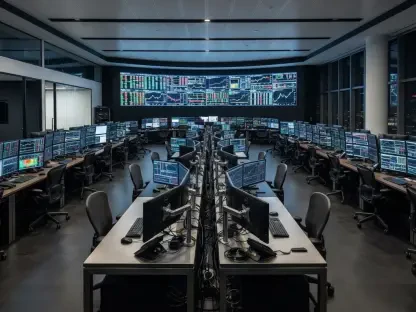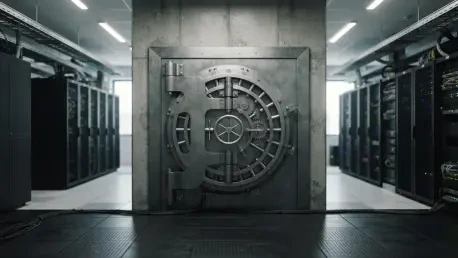

Coinbase is repositioning its Layer 2 solution as a specialized infrastructure designed to support the unique demands of an emerging economy driven by autonomous AI agents. This strategic pivot marks a definitive end to the era of the “race to the bottom,” where Layer 2 networks competed primarily on transaction fees and basic throughput metrics. As the industry navigates the complexities of the current landscape, the digital asset sector has recognized that the next multi-trillion-dollar opportunity lies not in capturing high-frequency retail traders, but in securing the institutional and machine-driven capital that requires absolute settlement finality. By prioritizing security as the core value proposition of the Base network, Coinbase is intentionally moving away from the perception of blockchain as a speculative playground. Instead, the platform is being reframed as a robust, institutional-grade environment where the integrity of assets is the primary design philosophy. This transition acknowledges a fundamental truth in the maturation of financial technology: while speed and cost are important, they are secondary to the trust required for sovereign-level or corporate-level asset management. Consequently, the development of Base is now focused on creating a verifiable security architecture that can withstand the increasingly sophisticated threats of a world where software and value are inseparable.
Prioritizing Security: Safety as the Scaling Constraint
The digital asset industry has reached a turning point where the novelty of low gas fees has been replaced by a desperate need for systemic reliability. For years, the narrative surrounding Ethereum scaling focused almost exclusively on transaction throughput and the reduction of costs to sub-penny levels. While these achievements were necessary to foster early adoption, the data gathered throughout early 2026 suggests a measurable inversion in what users prioritize. Coinbase has observed that both retail participants and institutional entities are now more concerned with the safety of their underlying assets than with the cost of moving them. This shift is a direct consequence of the historical volatility and security breaches that plagued the decentralized finance sector in previous years. In response, Base is being engineered to function as a hardened environment where security is the primary scaling constraint. This means that if a choice must be made between implementing a feature that reduces latency and one that increases the difficulty of a bridge exploit or smart contract failure, the security enhancement will take precedence every time. This philosophy treats security not as a static feature, but as a dynamic, evolving layer of the protocol that must adapt to increasingly sophisticated threats from both human actors and automated attack vectors.
Leveraging its position as a regulated, publicly traded company in the United States, Coinbase is using Base to bridge the trust gap that has long separated traditional finance from the on-chain world. Most decentralized networks operate in a permissionless vacuum where the identity of participants and the origin of funds are often opaque, creating a friction point for conservative capital managers. Base, however, is being positioned as a regulated gateway that combines the transparency of blockchain with the accountability of institutional oversight. This approach involves the deployment of advanced fund protection mechanisms, such as native transaction simulation and enhanced multisignature defaults, which are designed to prevent the most common types of user errors and malicious drainers. By focusing on account integrity, the platform aims to provide a user experience where the absence of security incidents is the standard expectation rather than a fortunate outcome. This strategy is intended to differentiate the network from competitors that may still prioritize experimental features over the essential task of ensuring that assets remain where they belong. The goal is to create a trusted infrastructure that can eventually host the life savings of millions, rather than just the speculative capital of a few early adopters who are willing to tolerate high levels of risk for high returns.
Asset Tokenization: Driving Growth Through Real-World Markets
The evolution of the Base network is deeply tied to the broader trend of asset tokenization, which is rapidly moving beyond the initial phase of stablecoin dominance. While digital versions of the US dollar were the first to prove the utility of on-chain value, the current landscape is seeing an influx of more complex financial instruments such as tokenized Treasuries, money market funds, and private credit. Coinbase is positioning its Layer 2 as the primary settlement layer where these instruments can be issued, traded, and settled in real time. This transition allows for the streamlining of the entire asset lifecycle, eliminating many of the intermediaries and administrative delays that currently hinder traditional bond and debt markets. By bringing these real-world assets into a unified programmable environment, the network enables a level of capital efficiency that was previously impossible. For example, a tokenized treasury bill can now be used as collateral in a decentralized lending protocol or instantly swapped for another asset without waiting for multi-day settlement cycles. This infrastructure does not just represent a new way to trade; it represents a fundamental redesign of how value is moved and managed across the global economy, providing a seamless bridge between legacy finance and modern technology.
For global asset managers, the primary appeal of Base lies in its ability to offer a compliant venue for large-scale operations. Major financial institutions have historically been hesitant to engage with public blockchains due to concerns over regulatory uncertainty and the lack of institutional-grade security. Coinbase addresses these concerns by providing an ecosystem that is compatible with existing regulatory frameworks while still benefiting from the innovations of decentralized finance. The integration with the broader Coinbase suite of services means that institutional clients can move assets between a regulated exchange and a secure Layer 2 network with minimal friction. This synergy is expected to attract a significant volume of non-stablecoin assets, ranging from tokenized real estate to corporate bonds, as fund managers seek to modernize their portfolios. Although the near-term pipeline of specific partners remains confidential, the strategic direction is clear: Base is being built to be the venue where institutional trades actually settle, rather than just a sidecar for speculative activity. As these high-value instruments migrate to the network, the focus on security becomes even more critical, as the consequences of an exploit on a multi-billion dollar credit fund would be far more catastrophic than a typical retail protocol hack, requiring a much higher standard of diligence.
The AI Economy: Integrating Artificial Intelligence into On-Chain Rails
Perhaps the most transformative element of the updated roadmap is the focus on the burgeoning economy of autonomous AI agents. Unlike previous iterations of the internet where software acted as a tool for humans, the emerging on-chain landscape is seeing the rise of software that acts as an independent economic actor. These AI models are capable of making decisions, executing transactions, and managing portfolios without constant human intervention. However, to operate effectively, these agents require a native payment infrastructure that is both fast and programmatically accessible. Coinbase is developing Base to serve as these agents’ primary financial rail, enabling machine-to-machine settlements that occur at a frequency and scale that would overwhelm traditional banking systems. In this new economy, an AI agent might pay for its own compute resources, lease data from other models, or even provide liquidity to a decentralized exchange to earn a return on its treasury. This shift requires the network to handle a massive influx of automated transactions that are initiated by code rather than by a user clicking a button. By providing these native rails, Base is positioning itself at the center of a technological convergence where artificial intelligence and blockchain technology become mutually reinforcing.
The integration of AI into the blockchain ecosystem introduces a unique set of security challenges that the Base team is actively working to solve. Autonomous agents are susceptible to different types of attacks than human users, such as prompt injection or model-level compromises that could trick an agent into draining its wallet. To mitigate these risks, the network is evolving to include specialized non-human authentication protocols and automated fraud detection systems that operate at the speed of the agents themselves. These tools use machine learning to monitor transaction patterns in real time, identifying and blocking suspicious activity before it can cause widespread damage. Furthermore, Coinbase is exploring the creation of secure sandboxes for AI agents, allowing them to test financial strategies in a controlled environment before deploying significant capital on the live network. This focus on programmatic safety is essential for building a sustainable AI economy, as it ensures that autonomous systems can interact with each other and with human users without introducing systemic risk. By building these security layers directly into the infrastructure, Base is creating a programmable playground where the next generation of software can flourish while maintaining the highest levels of asset protection and operational resilience for all network participants.
Future Considerations: Transitioning to an Automated Economy
The market’s initial reaction to this strategic pivot has been characterized by a notable sense of cautious observation. While some investors expected immediate product launches or dramatic price action, the reality of building institutional-grade security is a slower and more methodical process. Analysts suggest that the muted volatility in the wake of these announcements reflects a wait-and-see attitude from both retail traders and institutional observers. However, within professional circles, the shift away from a growth-at-all-costs mentality is being hailed as a sign of industry maturity. Many experts believe that the next wave of capital will not come from those chasing the lowest fees, but from those who require absolute certainty that their transactions will be settled correctly and their funds will remain secure. This focus on the fundamental aspects of finance—security, compliance, and reliability—is precisely what is needed to transition blockchain technology from a niche interest to a global standard. While the developer community remains divided on whether this focus might introduce unnecessary friction for innovation, the general consensus is that a trusted network is ultimately more valuable than a fast one. The success of this vision will depend on the platform’s ability to demonstrate consistent uptime and an absence of major vulnerabilities over the coming years.
The transition of the Base network during this period demonstrated that the industry’s focus had finally shifted from mere experimentation to the creation of permanent financial infrastructure. Looking forward, stakeholders should prioritize the development of standardized security audits specifically for AI-driven smart contracts and the implementation of real-time monitoring tools that can detect machine-to-machine anomalies. For asset managers, the logical next step involves migrating a portion of their private credit or treasury holdings to these secure rails to benefit from enhanced capital efficiency and transparency. Developers, meanwhile, must adapt by building applications that are not only user-friendly but are also optimized for autonomous agents, ensuring that their protocols can interact with the growing non-human economy. As the boundary between traditional finance and decentralized systems continues to blur, the emphasis on a security-first architecture will remain the most critical factor in determining which networks survive the next decade of digital evolution. The journey proved that the value of a network was not merely a function of its transaction speed, but of its ability to provide a safe and programmable environment for the world’s most important assets. Ultimately, the network transitioned from being a simple scaling tool into a critical piece of global infrastructure, setting the stage for a future where finance and technology are seamlessly integrated.