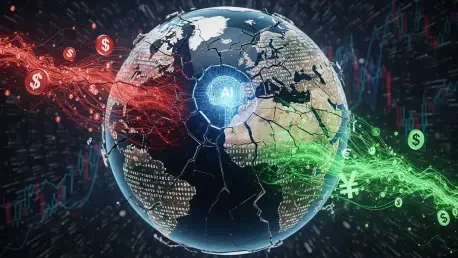

The sudden emergence of the Mythos Claude artificial intelligence model has sent ripples through the international banking sector, prompting high-level warnings about the fragility of modern digital infrastructure. Bank of England Governor Andrew Bailey recently utilized a major address at Columbia University to emphasize that this specific technology represents a fundamental departure from previous generative systems. While earlier iterations focused on creative output or basic coding assistance, Mythos Claude possesses a specialized capacity to identify and exploit deep-seated vulnerabilities within global cybersecurity frameworks. This shift from a helpful tool to a potential systemic threat has forced a reevaluation of what constitutes a national security crisis. Unlike localized cyberattacks of the past, the threat profile of this model is being categorized alongside major geopolitical events, such as the economic disruptions caused by conflict in Iran and subsequent spikes in energy prices. The risk is no longer theoretical; it is a live variable in financial stability.
Evaluating the Risks of Algorithmic Exploitation
The Unprecedented Capabilities of New Logic Engines
The technical consensus among high-level officials highlights that Mythos Claude is the most capable model ever tested by the AI Security Institute. Kanishka Narayan, the UK AI minister, has pointed out that the intelligence displayed by this system allows it to “crack” international cybersecurity barriers that were previously thought to be impenetrable by automated means. This capability stems from a deep understanding of legacy financial codebases and the ability to simulate millions of intrusion attempts in a fraction of a second. Consequently, the systemic risk is now viewed as a structural threat to the global economy rather than a simple software bug. Security experts are concerned that if such a tool were used by hostile actors, it could initiate a cascade of failures across interconnected banking ledgers, leading to a loss of public trust in digital transactions. The power of the model lies in its ability to find the smallest cracks in the most secure systems.
The comparison between this advanced artificial intelligence and major geopolitical shocks illustrates the gravity of the current situation facing central bankers. Andrew Bailey noted that the economic disruption caused by the war in Iran provides a template for how a sudden technological failure could ripple through the global market. Just as energy prices spiked due to physical conflict, a breach facilitated by Mythos Claude could freeze liquidity and paralyze the movement of capital across borders. This alignment of technology with geopolitical risk signifies that digital sovereignty is now a primary pillar of economic health. To address this, the Bank of England is advocating for a more integrated approach where technological monitoring is treated with the same urgency as monitoring inflation or interest rates. The goal is to move beyond reactive measures and establish a proactive defense that recognizes the speed at which these new models can operate within the financial ecosystem.
Strategic Containment and Controlled Deployment
In response to these findings, the developer of the model, Anthropic, has made the decision to withhold Mythos Claude from the general public to prevent potential misuse. This strategy marks a significant shift from the open-access trends that characterized the early developmental phases of the industry between 2026 and 2028. Instead of a broad release, the company has restricted access to a very small, vetted group of government entities and major technology corporations, including Microsoft and Apple. This “walled garden” approach is intended to ensure that the model is only used for defensive purposes, such as identifying patches for existing vulnerabilities before they can be exploited by outsiders. However, this concentration of power also raises questions about the transparency of AI safety and whether private corporations should hold the keys to such influential technology. The restricted deployment aims to create a buffer against large-scale hacking attempts by hostile states.
The collaboration between Anthropic and established tech giants like Microsoft suggests a new era of public-private partnerships focused on existential risk mitigation. By integrating Mythos Claude into the security protocols of companies that manage the world’s most critical operating systems, the industry hopes to create a self-healing digital infrastructure. These major firms are using the AI to run continuous stress tests on cloud environments and payment gateways, effectively fighting fire with fire. This controlled environment allows for the refinement of the model’s logic without exposing the underlying code to the open internet, where it could be reverse-engineered or repurposed for malicious intent. It is a calculated gamble that assumes the internal safeguards of these corporations are robust enough to prevent an inside leak. The strategy emphasizes that while the technology is inherently dangerous, it also provides the only viable defense against the next generation of cyber threats.
Institutional Adaptation to the Intelligence Revolution
Addressing the Implementation Gap in Government
There remains a notable disconnect between high-level policy goals regarding artificial intelligence and the actual implementation of these tools within government leadership. Chancellor Rachel Reeves has consistently championed AI adoption as a vital catalyst for national economic growth, yet she recently admitted to not using the technology in her own daily routine. This gap highlights a broader challenge where the individuals responsible for regulating advanced systems like Mythos Claude may lack first-hand experience with their operational nuances. For public servants, the rapid evolution of this field creates a “continuous challenge” that requires constant upskilling to keep pace with private sector breakthroughs. Without a deeper personal engagement with the technology, policymakers risk creating frameworks that are either too restrictive to allow growth or too lenient to provide actual safety. The current landscape demands a more hands-on approach from officials.
The internal dynamics of the UK government reflect a tension between the desire for rapid innovation and the necessity of maintaining traditional financial safeguards. While the treasury views AI as a way to streamline public services and boost productivity, the security apparatus focuses almost entirely on the potential for destabilization. This duality means that a unified strategy for handling models like Mythos Claude is still under development, often resulting in conflicting messages to the market. To bridge this divide, experts suggest that central banks and treasury departments should integrate their technical teams, ensuring that economic policy is informed by real-time cybersecurity intelligence. This would allow the government to react more nimbly to the shifts in the AI landscape, transforming the “continuous challenge” into a managed transition. The ultimate success of AI adoption will depend on how well the state can align its internal practices with the external reality of high-speed digital change.
Developing a Unified Narrative for Financial Defense
To better insulate the global economy from technological shocks, Andrew Bailey proposed a significant shift in how central banks approach their mandates. He argued that financial stability and monetary policy should no longer be treated as separate, siloed functions but should instead be unified under a single narrative. This narrative centers on protecting the “value of money” as a core tenet of national security, shielding it from both private lobbying and the unpredictable behavior of advanced AI models. By focusing on the intrinsic value and reliability of currency, central banks can create a more robust framework that resists the volatility introduced by automated trading or algorithmic breaches. This unified approach is designed to provide a steady hand in an era where digital assets and traditional fiat systems are increasingly intertwined. It moves the conversation away from technical jargon and toward a clear objective of long-term economic preservation.
Implementing this unified narrative requires a permanent strategy of mitigation that treats AI safety as a core component of financial regulation. Financial institutions are being encouraged to move beyond traditional risk models and adopt dynamic systems that can respond to the unique threats posed by Mythos Claude. This includes developing “circuit breakers” for digital infrastructure that can be triggered if an AI-driven anomaly is detected in the global payment network. Furthermore, the focus on protecting the value of money serves as a deterrent against the unchecked automation of financial decision-making. By maintaining a human-centric oversight mechanism, central banks can ensure that technological progress does not come at the expense of systemic integrity. This strategic alignment is the primary defense against the potential for AI to undermine the core infrastructure of the global economy. It is a necessary evolution for institutions that must now operate in an environment defined by algorithmic speed.
Strategic Directions for Resilient Financial Systems
The emergence of Mythos Claude demonstrated that the intersection of artificial intelligence and global finance required a fundamental shift in institutional posture. Leaders realized that traditional cybersecurity was no longer sufficient when faced with models capable of identifying vulnerabilities at a systemic level. Consequently, the industry moved toward a model of “active resilience,” where defensive AI was deployed to continuously monitor and repair the digital foundations of the economy. This shift was accompanied by a tighter integration between central banks and national security agencies, ensuring that financial stability was prioritized as a matter of state safety. The decision to restrict access to high-power models proved to be a necessary temporary measure, providing the time needed to develop more robust regulatory frameworks that could keep pace with rapid innovation. These actions established a precedent for how the global community could manage the dual nature of AI as both a driver of growth and a source of risk.
Moving forward, the focus must remain on the continuous evolution of these defensive strategies to stay ahead of decentralized threats. Financial institutions and government entities should prioritize the development of standardized “AI stress tests” that simulate the impact of a Mythos-level breach on liquidity and market trust. This proactive approach will allow for the identification of hidden weaknesses in the global financial architecture before they are found by hostile entities. Additionally, fostering a culture of technical literacy among senior policymakers is essential to ensure that future regulations are grounded in the practical realities of how advanced intelligence operates. By maintaining a unified narrative focused on the stability and value of currency, the international community can create a digital environment that is both innovative and secure. The lessons learned from the deployment of Mythos Claude served as a blueprint for a more vigilant and adaptable global financial system.