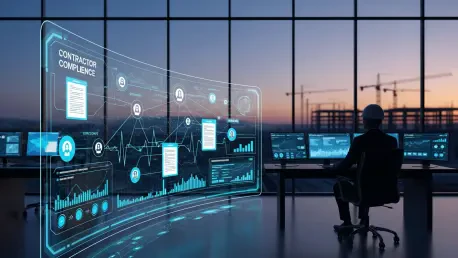

Industrial safety protocols in the heavy manufacturing and logistics sectors are currently undergoing a radical transformation as companies seek to eliminate the human error inherent in managing sprawling networks of third-party contractors. The precarious nature of these industries means that even a single lapse in compliance or an unverified certification can lead to catastrophic financial losses or, more tragically, the loss of human life on a high-stakes job site. Parakeet Risk has addressed this vulnerability by creating autonomous software entities that do more than just store data; they actively mimic the observational and decision-making processes of seasoned risk professionals. By immersing the development team in the actual day-to-day operations of construction and procurement through extensive ethnographic research, the company ensured its AI agents reflect the real-world pressures and legal requirements of the physical job site. This approach marks a shift from passive record-keeping to an active monitoring system that operates as a relentless, digital heartbeat for industrial safety and compliance.
The Financial Reality of Industrial Vulnerability
The Financial Toll: Why Compliance Is a Survival Metric
The current economic landscape for mid-sized industrial firms is characterized by a precarious balance where the distance between a successful project and total insolvency is often a single safety violation. Research indicates that the direct cost of a localized safety incident averages approximately $260,000, which is substantial enough to disrupt operations, yet the secondary legal consequences represent the true existential threat. Legal penalties and non-compliance fines frequently escalate beyond the $2.5 million mark, creating a financial burden that can take a company up to three full years to navigate. For many organizations operating on slim profitability, these timelines are simply untenable, leading to permanent closure or forced acquisitions. Consequently, the adoption of automated due diligence has shifted from being a high-tech luxury to an essential survival mechanism for any company that manages a significant volume of external labor. This financial reality has forced a total reevaluation of how risk is calculated during procurement phases.
Beyond the immediate fines, the long-term erosion of brand reputation and trust within the industry can be even more damaging than the initial monetary penalty. When a contractor is found to be working without valid insurance or the proper safety certifications, the liability often falls squarely on the shoulders of the hiring firm, leading to a cascade of litigation that can paralyze a supply chain for months. The traditional methods of manual tracking, involving spreadsheets and physical folders, have proven woefully inadequate in an era where workforce turnover is high and regulatory standards are constantly evolving. By implementing a continuous monitoring system, firms are finding that they can mitigate these risks before they manifest as accidents. The ability to identify a lapse in coverage in real-time allows managers to halt work immediately, protecting both the workers on the ground and the company’s bottom line. This proactive stance is becoming the standard for insurance providers, who are increasingly favoring firms that utilize such robust oversight.
Ethnography as a Tool: Building Better Risk Architecture
The foundation of modern risk management software is no longer just code; it is built upon a deep understanding of the human cultures that exist within the construction and manufacturing environments. To build a system that professionals would actually use, the architects of this technology spent a year shadowing procurement officers and safety managers to witness the friction points of their daily routines. This ethnographic approach allowed the developers to see how easily critical paperwork can be overlooked when a manager is supervising dozens of active sites. They discovered that the primary cause of risk exposure was not negligence, but rather the sheer cognitive load of manual verification. By designing the AI to mirror the specific workflows and thought patterns of these experts, the technology integrates seamlessly into existing industrial cultures. This ensures that the software acts as a partner rather than a replacement, augmenting the capabilities of the human staff while providing a layer of oversight that never sleeps.
This deep-level immersion also highlighted a critical vulnerability in global infrastructure: the fact that many industries operate on margins so thin that even a minor oversight can lead to total financial collapse. The research revealed that the pressure to meet deadlines often forces procurement teams to skip rigorous background checks in favor of speed. Recognizing this, the development of “parakeet” agents focused on automating the “boring but essential” tasks that typically fall through the cracks. These agents were programmed to understand the specific safety standards of individual companies, allowing them to verify identities and insurance documents with a level of precision that exceeds manual efforts. By removing the burden of paperwork from the safety officers, the system allows these professionals to focus on the physical hazards of the site. This synthesis of technology and human expertise has created a more resilient framework for managing the complex interplay between contractors, regulatory bodies, and internal safety departments.
Deploying Autonomous Mimicry for Safety
The Mimicry Model: How AI Replicates Human Expertise
The primary innovation in this field is the use of autonomous AI agents capable of reasoning through complex objectives without constant human intervention or manual prompting. These digital agents are designed to learn the specific, often idiosyncratic, safety standards of a firm and then replicate those workflows across thousands of data points. Unlike traditional automation, which follows a rigid set of rules, these agents can adapt to new information, such as a change in local labor laws or an update to a contractor’s certification status. By mimicking the watchful eye of a human expert, the software ensures that risk management happens as a continuous “heartbeat” rather than an occasional, hurried check. This constant state of vigilance is what separates modern AI-driven risk platforms from the static databases of the past. It provides a dynamic shield that is as flexible and responsive as the workforce it monitors, ensuring that no detail is missed in the fast-paced environment of a logistics hub.
These digital agents focus their analytical power on three high-stakes areas: verifying insurance coverage, confirming the identity of personnel entering a site, and tracking the ongoing renewal of safety certifications. This systematic approach effectively removes the guesswork and human bias from contractor management, ensuring that every individual on a site has been properly vetted according to the highest standards. By automating these repetitive tasks, the system creates a safety net that catches paperwork errors long before they turn into site-wide liabilities or legal disasters. Furthermore, the agents can communicate directly with contractors to request missing documents, streamlining the communication process and reducing the administrative load on procurement teams. This level of autonomy allows the system to scale alongside the company, managing hundreds or even thousands of contractors with the same level of detail as a single individual. The result is a more organized, compliant, and ultimately safer industrial environment.
Demonstrating Impact: Practical Implementation and Scalability
The practical value of this technology was recently demonstrated through a strategic partnership with a large manufacturer in Trinidad and Tobago that manages over 100 different contractors. Before the transition to an AI-powered system, the company relied on manual records that were notoriously difficult to keep current, leaving them exposed to massive liability if an uninsured worker were injured. Upon deploying the autonomous agents, the manufacturer discovered that more than half of their active contractors were operating with expired documents or inadequate insurance coverage. This revelation allowed the company to immediately address the gaps, bringing their entire operation into compliance within a matter of weeks. This case study serves as a powerful testament to the hidden risks that exist in even the most established industrial organizations. It also highlights how quickly a technology-driven approach can rectify long-standing vulnerabilities that manual processes were unable to detect or manage effectively.
To maintain and scale this technology globally, the development team has adopted a leadership style that emphasizes shared culture and continuous internal education. By holding weekly sessions to discuss evolving industry trends and regulatory changes, the technical staff ensures that the AI agents remain closely aligned with the real-world needs of the people using the software. This focus on expertise and financial sustainability has led to significant market growth, with revenues tripling as the platform expanded into larger industrial sectors. The demand for such solutions is fueled by the increasing complexity of modern contractor networks and the global need for infrastructure stability. As the company moves toward managing even more complex industrial environments, the goal remains the same: to use specialized AI as a fundamental tool for preserving human safety and business viability. This strategy has proven that high-tech solutions are not only compatible with “dirty” industries like logistics and construction but are essential for their future survival.
Strategic Solutions: The Path Toward Integrated Risk Management
The transition from reactive manual auditing to continuous AI oversight proved that technological mimicry was not merely about automation, but about the preservation of institutional integrity. As companies moved through the current operational cycle, the implementation of these digital sentinels became the definitive standard for excellence in the construction and logistics sectors. Leaders who prioritized these autonomous systems found that they could scale their operations without proportionately increasing administrative overhead, thus solving the classic productivity bottleneck. The move toward specialized AI empowered safety officers to focus on strategic hazard mitigation rather than getting lost in the weeds of insurance paperwork. Ultimately, the successful deployment of this technology demonstrated that the safest way forward for heavy industry was to embrace software that thinks and acts with the same vigilance as a human professional, but with the tireless consistency of an advanced machine.
Moving forward, organizations must prioritize the integration of these autonomous agents into their core procurement and safety strategies to remain competitive. The financial data showed that firms utilizing continuous monitoring experienced fewer legal disruptions and lower insurance premiums over time. It was recommended that companies perform a comprehensive audit of their existing contractor management workflows to identify where manual errors are most likely to occur. By replacing these vulnerable points with AI-driven mimicry, businesses can build a more resilient infrastructure that is capable of withstanding the pressures of a global economy. The shift toward a digital “heartbeat” of compliance is no longer a future concept but a present reality that has redefined the boundaries of industrial risk management. Those who adopted these measures early have already begun to see the benefits of a safer, more transparent, and more profitable operation that is prepared for any regulatory or operational challenge that might arise.