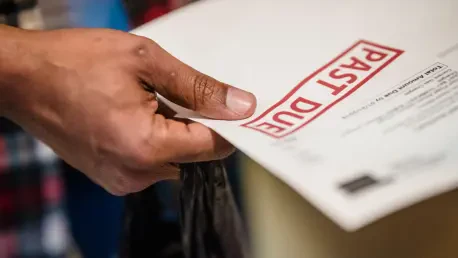

In the current economic climate of South Africa, a staggering number of households are increasingly finding that their monthly salaries are insufficient to cover even the most basic necessities of daily life. This trend has led to a paradigm shift where credit is no longer viewed as a tool for wealth creation or asset acquisition but has instead become a secondary, albeit more expensive, salary stream used to bridge the widening gap between earnings and expenditure. Recent data from the National Credit Regulator indicates that more than half of all credit-active consumers are struggling to meet their financial obligations, reflecting a deep-seated reliance on high-interest unsecured loans to survive. As the cost of essential services like electricity and water continues to climb at rates far exceeding annual wage increases, the middle class finds itself squeezed into a cycle of perpetual borrowing. This phenomenon raises critical questions about the long-term sustainability of a consumer-driven economy when the consumers themselves are effectively insolvent before their paychecks even arrive in their bank accounts.
Structural Drivers of the Credit Reliance Cycle
The persistent mismatch between the trajectory of inflation and the stagnant growth of corporate remuneration packages has created a structural deficit within the domestic labor market. While companies have faced their own challenges with rising operational costs and logistical hurdles, the burden has largely shifted onto the shoulders of employees who now navigate a landscape of diminished purchasing power. Food price volatility, driven by both local agricultural shifts and global supply chain disruptions, remains one of the primary catalysts forcing families to turn to retail store cards and short-term credit facilities for their weekly sustenance. Unlike previous decades where debt was primarily linked to the purchase of vehicles or property, today’s financial obligations are increasingly fragmented across numerous small, high-frequency transactions that represent the erosion of disposable income. This shift signifies a fundamental change in the national economic fabric, where the reliance on credit has transitioned from an occasional convenience to a permanent requirement for maintaining a basic standard of living across various demographics.
Furthermore, the proliferation of digital lending platforms and fintech innovations has made access to credit more immediate and frequent than ever before, which inadvertently accelerates the debt accumulation process. While these technological advancements offer financial inclusion to previously underserved populations, they also lower the barriers to entry for survival-based borrowing that carries significant interest penalties. Many individuals now utilize “buy now, pay later” schemes for items as mundane as school uniforms and basic household repairs, effectively mortgaging their future income to solve immediate crises. This pervasive culture of debt is not merely a reflection of poor financial management but is a logical, albeit desperate, response to an environment where the math of survival no longer adds up based on wages alone. The cumulative effect of these small-scale loans creates a massive debt overhang that restricts future economic mobility and reduces the capacity for personal savings. Consequently, the financial sector sees robust activity in consumer lending even as broader economic indicators suggest a slowing of productive investment and capital expenditure.
Strategic Shifts for Reclaiming Financial Independence
Addressing this systemic reliance on survival-sized debt requires a coordinated effort from both the private sector and regulatory bodies to ensure that credit remains a pathway to growth rather than a trap. Financial institutions must evolve their business models to prioritize customer solvency, perhaps by offering more competitive interest rates for debt consolidation or by integrating automated savings tools within their digital interfaces. Moreover, employers have a unique opportunity to alleviate financial stress by exploring innovative salary payment structures or providing access to low-interest emergency funds that bypass traditional predatory lenders. On a broader scale, policy interventions that focus on lowering the cost of essential services and providing tax incentives for personal savings can help rebuild the erosion of disposable income. By fostering an environment where wage growth is aligned with the actual cost of living, the economy can shift away from a debt-dependent model toward one based on sustainable consumption and asset accumulation. These proactive steps are essential for restoring the financial health of households and ensuring that the middle class remains a viable engine for future national prosperity and development.
The realization that salaries were being systematically replaced by debt prompted a series of decisive actions that eventually stabilized the domestic financial landscape. Policymakers introduced stringent caps on the interest rates of short-term loans and enhanced the transparency requirements for digital lending apps, which protected consumers from hidden fees and aggressive collection tactics. Community-led financial literacy programs successfully shifted the public discourse from crisis management to long-term wealth building, empowering individuals to negotiate better terms with their creditors. Banks and fintech startups collaborated to launch products that rewarded positive repayment behavior with lower rates, effectively incentivizing financial responsibility. These collective measures resulted in a measurable decrease in debt-to-income ratios and a slow but steady increase in household savings rates. As the reliance on credit for basic survival waned, the economy demonstrated a more robust resilience to external shocks, and the link between labor and financial security was finally restored. The period of survival-sized debt served as a critical wake-up call that reshaped the national approach to economic fairness and sustainable growth.