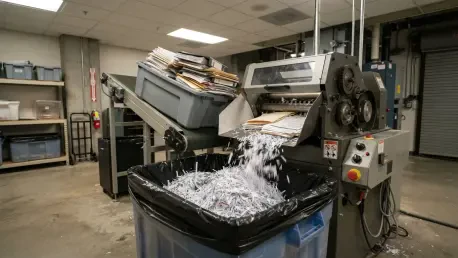

The persistence of physical media in 2026 creates a unique paradox for modern enterprises striving for efficiency while managing escalating security threats. Even as cloud-native operations become the global standard, the volume of sensitive paper records—ranging from legacy architectural blueprints to current high-stakes litigation documents—presents a significant vulnerability if not managed with absolute precision. Strategic document destruction facilitates digital transformation by allowing companies to securely dispose of physical originals once they have been scanned and verified. This transition is not merely about clearing shelf space; it is a fundamental shift in how organizations perceive the lifecycle of information. By treating the final disposal of a record as equally important as its creation, businesses can effectively mitigate the risks associated with data persistence. This proactive stance ensures that once a document has served its legal and operational purpose, it is permanently neutralized before it can be exploited by malicious actors or lead to inadvertent disclosure.
Protecting Corporate Assets and Stakeholder Privacy
Managing Security Risks: The Prevention of Identity Theft
The correlation between physical document mismanagement and the rising incidence of identity theft remains a pressing concern for corporate security officers. Data from consumer protection bureaus indicates that over a million identity theft reports are filed annually, with a notable portion originating from recovered physical documents. Information such as Social Security numbers, confidential banking details, and home addresses are essentially currency for cybercriminals who scavenge through improperly discarded waste. Professional shredding services offer a specialized barrier by utilizing industrial-grade equipment that renders documents into micro-cut particles.
Beyond the immediate financial implications of a data breach, the long-term damage to a company’s reputation can be catastrophic and often irreversible. When clients or partners provide sensitive information, there is an implicit trust that the data will be protected until its terminal disposal. If a firm is found responsible for a leak due to negligence in handling physical trash, the resulting loss of confidence can trigger a mass exodus of stakeholders and investors. Modern enterprises must view secure destruction as a critical component of their overall brand integrity, reinforcing a company’s commitment to ethical stewardship.
Security Integration: Weaving Protection into Workplace Culture
Truly effective information security is never a localized event; rather, it must be deeply woven into the fabric of daily operations and organizational culture. This integration begins with the establishment of comprehensive document retention policies that provide clear guidance on the lifespan of specific record types. For example, tax records, employee medical files, and legal contracts each have different mandatory retention periods dictated by federal and state statutes. In 2026, many organizations have transitioned to automated systems that flag documents for destruction the moment their utility expires, preventing the accumulation of liability.
To support a culture of security, organizations must provide the necessary physical infrastructure that makes compliance intuitive for all staff members. The strategic placement of locked collection bins throughout the office environment is a simple yet highly effective way to prevent casual snooping or the accidental disposal of confidential documents in open trash cans. These bins ensure that once a document is discarded, it is immediately placed beyond the reach of unauthorized personnel until it can be processed. When security measures are seamlessly integrated into the physical workspace, protecting information becomes a natural, effortless part of the routine.
Navigating the Legal and Regulatory Landscape
Compliance Standards: Adhering to Federal Mandates
Regulatory oversight regarding the disposal of sensitive data has intensified, moving secure document destruction from a recommended practice to a mandatory legal obligation. The Federal Trade Commission’s Disposal Rule is a prime example of such a mandate, requiring businesses that handle consumer report information to take reasonable measures to ensure no unauthorized access occurs during disposal. This rule is designed to prevent information from being salvaged from the trash, placing the burden of proof squarely on the shoulders of the business. Organizations that fail to implement standardized destruction processes risk facing significant legal penalties.
In addition to broad federal rules, many industries are subject to specific regulations that necessitate strict document destruction timelines and methods. For instance, the healthcare sector must navigate the complexities of HIPAA, while financial institutions are bound by the Gramm-Leach-Bliley Act. As of 2026, the intersection of these laws has created a complex regulatory web that requires constant vigilance and specialized expertise to navigate. Professional destruction services stay abreast of these changing legal requirements, offering solutions that allow businesses to outsource the risk associated with disposal, knowing that their practices are handled by experts.
Accountability Measures: Establishing a Verifiable Audit Trail
A cornerstone of a professional document destruction program is the provision of a Certificate of Destruction, which serves as a vital piece of evidence for internal and external verification. This document confirms the date, location, and method of destruction, providing a formal record that the business has fulfilled its due diligence in protecting sensitive information. In 2026, these certificates have become essential during regulatory reviews, as they offer tangible proof that a company is adhering to privacy mandates. Without such documentation, an organization may find it difficult to defend its actions in the event of a breach.
Beyond regulatory compliance, a well-documented audit trail provides a significant layer of protection during litigation and legal disputes. If a company is ever accused of mishandling confidential information, the ability to produce a comprehensive history of secure disposal can be the difference between a successful defense and a costly settlement. This systematic documentation ensures that the business can prove its commitment to privacy standards at any given time, providing peace of mind for management and stakeholders. Periodic internal audits of these records allow an organization to identify gaps and make adjustments, showcasing a dedication to long-term data accountability.
Enhancing Operational Efficiency and Sustainability
Logistical Choices: Selecting the Right Destruction Methodology
When organizations decide to formalize their document disposal, they must choose a logistical model that best fits their specific operational needs and security requirements. On-site shredding has emerged as a preferred option for companies that handle extremely sensitive materials or those that require immediate verification of the destruction process. This method involves specialized mobile shredding units that arrive at the business’s doorstep and pulverize documents in a secure environment before the truck leaves the premises. This approach provides transparency, as designated personnel can witness the destruction firsthand, ensuring that no sensitive data ever leaves the site intact.
Conversely, the off-site shredding model offers a highly efficient and cost-effective solution for organizations dealing with high-volume archival purges or regular collections. In this scenario, documents are placed in secure, locked containers and transported by vetted professionals to a centralized facility equipped with industrial shredders. This method is often more scalable for large enterprises with multiple locations, as it allows for the consolidation of waste streams. In 2026, many off-site facilities utilize advanced tracking technologies, such as GPS-monitored vehicles and barcode scanning, to maintain a strict chain of custody from the office to the final processing facility.
Environmental Impact: Promoting Lean and Sustainable Operations
Strategic document destruction is a powerful catalyst for operational efficiency, supporting lean office management by reclaiming physical square footage once dedicated to storage. Many organizations find themselves burdened by rows of filing cabinets containing documents that have long since passed their utility or legal retention requirement. By implementing a systematic purging process, these companies can clear out cluttered storage rooms and repurpose that space for productive uses, such as collaborative areas. This reclamation of space also reduces the overhead costs associated with off-site storage facilities, which can be a significant drain on corporate budgets over time.
Beyond the operational benefits, professional document destruction aligns with the increasing corporate focus on environmental responsibility. In 2026, businesses are under pressure to demonstrate eco-friendly practices, and shredding services provide a direct pathway to meeting these goals. Most professional shredding organizations partner with recycling programs to ensure that every ton of pulverized paper is processed and repurposed into new products. This creates a closed-loop system where sensitive information is protected with absolute security while the raw materials are handled sustainably. Choosing a partner that prioritizes recycling enhances a company’s environmental profile.
Establishing a Resilient Future for Information Stewardship
The implementation of a structured document destruction program proved to be a transformative decision for organizations seeking to navigate the complexities of 2026. By treating information disposal with the same gravity as data creation, businesses effectively closed a significant security gap that previously left them vulnerable to identity theft and regulatory scrutiny. The transition to professional shredding services not only fortified their defenses against unauthorized access but also provided the verifiable evidence needed to satisfy increasingly stringent legal mandates. As organizations moved forward, the integration of secure disposal into the broader digital transformation strategy ensured that physical liabilities did not hinder operational agility. The most successful firms were those that viewed this process as a strategic investment rather than a mere cost of doing business. Moving ahead, companies continued to evaluate their retention policies and disposal methods in light of emerging technologies to ensure their security posture remained robust. Adopting a proactive stance toward document lifecycles remained a foundational requirement for any business.