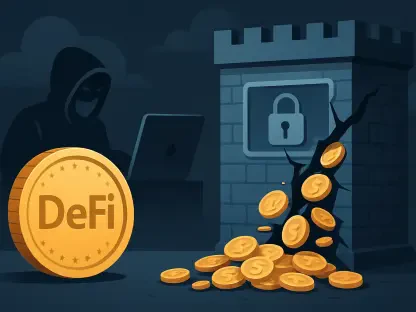

To mitigate the risk of targeted attacks, security experts suggest that cryptocurrency owners practice privacy by design and avoid advertising their wealth in public forums. This recommendation comes in response to the proliferation of “wrench attacks,” a term describing physical assaults intended to extract digital credentials through sheer force. While modern encryption provides near-impenetrable barriers against remote hacking, the human element remains a glaring vulnerability that criminals are now exploiting with increasing brutality. These incidents represent a synthesis of traditional violent crimes, such as home invasions and kidnappings, with high-tech financial theft. By targeting individuals who openly display their success in the digital asset space, organized groups are bypassing firewalls and biometric locks by simply threatening the physical safety of the owner. This shift underscores a new reality where the security of a digital portfolio is inextricably linked to the physical personal safety and operational discretion of the investor in the real world.
Targeted Violence Within the Chicago Area
The severity of this trend was illustrated by a harrowing incident in the Chicago metropolitan area where a family and their nanny were abducted from their Lincoln Park residence. The perpetrators held the victims for five days while demanding a ransom of fifteen million dollars in cryptocurrency, demonstrating the immense leverage that digital assets provide to kidnappers. Although federal authorities eventually managed to recover approximately four million dollars of the stolen funds, the vast majority of the assets vanished into a complex web of obfuscated transactions. This case served as a wake-up call for the community, highlighting how the perceived anonymity and speed of digital currency transactions could be weaponized by violent actors. The logistical challenges of transporting physical cash are non-existent in the crypto world, allowing criminals to move millions of dollars across international borders within seconds of the physical coercion, making rapid intervention by law enforcement nearly impossible.
In a separate but equally disturbing case in Winnetka, a suspect utilized the guise of a food delivery driver to gain entry into a private home. Once inside, the assailant held the residents at gunpoint and specifically demanded the locations of hardware wallets and the passcodes for various digital exchanges. This incident showcased a deliberate shift in criminal targeting, as the attacker prioritized digital assets over traditional valuables like jewelry or high-end electronics. The intruder demonstrated a sophisticated understanding of the victim’s financial profile, likely gained through an analysis of social media activity or leaked public data. This level of premeditation suggests that criminals are no longer stumbling upon crypto owners by chance; they are actively scouting and profiling high-net-worth individuals who lack sufficient physical security measures. The psychological impact of these home invasions is profound, as victims realize that their digital wealth has made them targets for the same types of violent crimes.
Understanding Criminal Motivations and Asset Risk
Statistical analysis from security firms indicated a thirty-three percent increase in these types of violent extraction crimes over the recent year, with documented losses exceeding one hundred twenty-four million dollars. However, experts from the FBI noted that these figures likely represented only a fraction of the actual occurrences, as many victims remained hesitant to come forward due to fears of further retaliation or a belief that decentralized assets were irrecoverable. The administrative challenge of tracking these crimes was further complicated by the fact that many police departments classified these incidents as standard armed robberies or home invasions without specifically noting the crypto-centric motivation. This lack of granular data has made it difficult for policymakers to allocate the necessary resources to combat this specific epidemic effectively. Despite these hurdles, the transparency of the blockchain allowed investigators to trace some digital breadcrumbs, but the velocity at which “bad actors” off-ramp funds into fiat currency remained the primary obstacle.
The appeal of digital assets for violent criminals is rooted in the absence of a central regulatory body that can freeze or reverse transactions once they are broadcast to the network. Unlike a bank transfer that can be clawed back if fraud is detected, a blockchain transaction is final the moment it is confirmed by the network. Criminals recognized that they could liquidate these assets through decentralized exchanges or peer-to-peer markets before law enforcement could even be notified of the physical assault. Furthermore, the global nature of cryptocurrency means that stolen funds can be layered through dozens of wallets across different jurisdictions in minutes. This speed of movement created an environment where the traditional investigative timeline was often too slow to prevent the permanent loss of funds. Consequently, attackers viewed the risk-to-reward ratio of a physical confrontation as highly favorable compared to traditional bank robberies, which carried significantly higher risks of immediate apprehension and smaller potential payouts.
Strategic Measures for Personal Asset Protection
Security consultants emphasized the importance of maintaining a low profile within the digital community to prevent becoming a visible target for organized syndicates. They recommended that investors utilize multisignature wallet configurations which required authorization from geographically dispersed individuals to release significant funds. This approach effectively eliminated the possibility of a single victim being coerced into transferring their entire net worth during a localized physical assault. Experts also suggested that the implementation of time-locked smart contracts provided a necessary deterrent, although they cautioned that such measures potentially increased the duration of a hostage situation. Furthermore, law enforcement agencies advised that all suspicious activities be reported to the Internet Crime Complaint Center to assist in tracking the sophisticated laundering techniques used by these criminals. Ultimately, the industry moved toward a model where operational security became as critical as the underlying encryption technology itself.
Moving forward, the adoption of decoy wallets and duress passwords became a common strategy for individuals residing in high-risk areas. These tools allowed a victim to provide a secondary set of credentials that granted access to only a small fraction of their total holdings, potentially satisfying an attacker while keeping the bulk of the wealth secure. Security firms also highlighted the necessity of isolating primary storage devices from daily-use electronics, ensuring that the most valuable keys were not easily accessible during a snap home invasion. While technology provided several layers of defense, the consensus among security professionals was that behavioral changes remained the most powerful weapon against wrench attacks. By treating their digital wealth with the same level of discretion as physical cash or gold, investors significantly reduced the likelihood of being profiled by predators. The shift in criminal tactics required a corresponding shift in investor mindset, moving from a focus on digital firewalls to a holistic strategy of physical and informational protection.