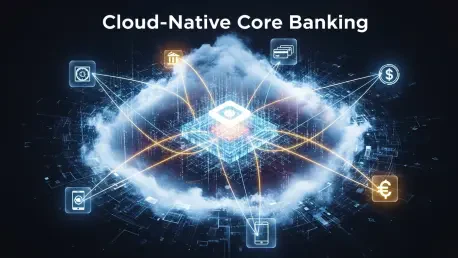

The rapid obsolescence of traditional mainframe banking systems has created a critical gap between customer expectations and institutional capability. As financial institutions grapple with the limitations of rigid, legacy codebases, the emergence of cloud-native core banking offers a radical departure from the status quo. This technology is not merely a cosmetic update; it represents a fundamental shift toward modular, API-first environments that prioritize agility over static stability. By decoupling the core ledger from the user interface, banks can now deploy updates in hours rather than months, effectively bridging the divide between established reliability and the speed of modern fintech competitors.
The Evolution of Modern Core Banking Systems
The transition from monolithic architectures to cloud-ready frameworks has been driven by the need for extreme flexibility in an unpredictable market. Historically, banking systems functioned as unified blocks of code where a single change could destabilize the entire environment. Modern core systems, however, utilize microservices to isolate specific functions, allowing for independent scaling and maintenance. This shift enables institutions to remain relevant in a broader technological landscape where consumers expect instantaneous service and personalized financial products.
In this evolving context, the move toward cloud-native solutions represents a strategic pivot rather than a simple technical upgrade. It allows banks to shed the weight of technical debt that has accumulated over decades. By adopting these agile structures, financial entities can finally match the rapid innovation cycles seen in the tech industry, ensuring that their underlying infrastructure supports rather than hinders their growth ambitions in an increasingly digital-centric world.
Technical Foundation and Core Functionalities
Real-Time Data Streaming and Open Architecture
At the heart of modern core banking lies an open architecture that leverages real-time data streaming to eliminate the latency inherent in batch processing. This capability is essential for multi-currency operations where exchange rates and balance updates must be synchronized across global markets instantly. By utilizing event-driven protocols, the system ensures that every transaction is immediately reflected across all integrated platforms, providing a single, accurate source of truth for both the bank and the client.
Moreover, the openness of this architecture facilitates seamless connectivity with third-party providers through robust APIs. This means that a bank is no longer a closed silo but a central hub in a wider financial ecosystem. The technical performance of these systems is measured by their ability to handle thousands of concurrent transactions without performance degradation, a feat that traditional systems struggle to achieve during peak periods.
Scalable Infrastructure for Digital Deposit Management
Managing “money at rest” requires a sophisticated approach to reliability and high-volume processing, especially as digital deposit volumes surge. Cloud-native platforms excel here by offering elastic scaling, which automatically adjusts computing resources based on real-time demand. This ensures that whether a bank is managing a sudden influx of savings or steady long-term deposits, the operational integrity remains uncompromised.
The significance of this infrastructure extends beyond simple storage; it involves the complex calculation of interest and the enforcement of compliance protocols at scale. By automating these “back-office” functions within a high-performance cloud environment, banks reduce the risk of human error and operational bottlenecks. This reliability is the bedrock upon which consumer trust is built in the digital age.
Emerging Trends in Digital Financial Services
The industry is currently witnessing a profound move toward experience-led banking, where the focus shifts from product-centric models to user-centric journeys. This trend is enabled by API-driven ecosystems that allow for the rapid assembly of bespoke financial services. Instead of offering a generic savings account, banks can now use real-time insights to suggest tailored certificates of deposit or tiered interest programs that align with specific customer behaviors.
Furthermore, there is a clear departure from the traditional concept of “fixed-term” technology projects. Innovation is now viewed as a continuous, iterative journey where the platform is constantly refined through small, frequent updates. This model of persistent evolution ensures that the technology never becomes a legacy burden, allowing institutions to pivot their strategies as quickly as market conditions or regulatory requirements change.
Real-World Applications and Strategic Case Studies
In the U.S. digital banking sector, these technologies have already demonstrated their value through the modernization of deposit infrastructures for major players. For instance, the integration of high-performance cores has allowed institutions to support massive savings programs and co-branded retail products with unprecedented efficiency. These implementations show that a modernized core can manage billions in deposits while simultaneously improving the responsiveness of mobile applications.
Case studies reveal that banks utilizing cloud-native platforms are better equipped to launch niche financial products, such as specialized credit cards or loyalty-integrated accounts, within weeks. By leveraging a unified infrastructure, these organizations can provide a consistent experience across diverse product lines. This strategic synergy not only deepens customer engagement but also maximizes the lifetime value of each user by offering a comprehensive suite of digital tools.
Implementation Challenges and Risk Mitigation
Despite the clear advantages, migrating from a legacy environment to a cloud-native core is fraught with complexity. The primary challenge lies in the secure transfer of massive data sets without disrupting ongoing operations. Organizations must navigate strict security and compliance standards, ensuring that data privacy is maintained throughout the transition. The risk of downtime during such a migration can have significant reputational and financial consequences.
To mitigate these risks, industry leaders are adopting phased, iterative upgrade strategies rather than “big bang” implementations. By breaking the modernization process into manageable stages, banks can test and validate each component before full deployment. This approach, combined with AI-driven monitoring tools, allows for smarter data insights and the early detection of potential anomalies, ensuring a smoother transition to the new digital reality.
The Future of Cloud-Native Banking Ecosystems
Looking forward, the integration of AI-driven analytics will likely transform banking from a reactive service to a predictive partner. Future developments will focus on hyper-personalization, where the core system anticipates customer needs before they are explicitly expressed. Breakthroughs in predictive finance will enable banks to offer automated wealth management and real-time risk assessments, fundamentally changing how consumers interact with their money.
The long-term impact of these advancements will be a radical increase in global banking competitiveness. As barriers to entry are lowered by accessible, high-performance cloud infrastructures, the distinction between traditional banks and fintech disruptors will continue to blur. Success in this future landscape will depend on an institution’s ability to maintain a modular and agile core that can integrate new technologies as they emerge.
Comprehensive Assessment and Industry Impact
The review of cloud-native core banking revealed that modularity and agility were no longer optional features but essential requirements for survival. It was clear that the successful transition to these platforms allowed institutions to reclaim their competitive edge by offering superior user experiences and operational efficiency. The assessment showed that while the migration path was demanding, the long-term benefits of a scalable, API-first architecture far outweighed the initial hurdles of implementation.
The final verdict highlighted that this technology has fundamentally reshaped the financial services sector by lowering the cost of innovation. Future efforts should prioritize the standardization of API protocols and the deepening of AI integration to ensure that these systems remain resilient against emerging security threats. Stakeholders who invested in these flexible architectures have positioned themselves to lead the next wave of global financial evolution, turning the once-static core into a dynamic engine for growth.